
Running a business from Bali sounds like the dream, and in a lot of ways, it really is. The island offers a genuinely lower cost of living, a global community of entrepreneurs, and the kind of lifestyle that makes work from paradise feel less like a cliche. There’s one thing a surprising number of digital nomads let slide is keeping their books in order.
This guide covers why outsourced bookkeeping matters so much for nomads based in Bali, what it should actually include, and how to know when it’s time to stop doing it yourself.
Why You Need Bookkeeping Service in Bali?
The Multi-Currency, Multi-Platform Mess
As a global entrepreneur, managing income and expenses across several countries can turn into a genuine juggling act faster than you’d expect. You might be getting paid through Stripe in USD, invoicing clients in EUR, holding funds in Wise, and spending in Indonesian Rupiah day to day, and each of those platforms reports things slightly differently.
You need a consistent process for pulling all of that together, it becomes incredibly easy to lose track of your actual cash position, especially once you’re running the business for more than a few months.
Currency conversion timing alone can distort your numbers if you’re not tracking exchange rates consistently, which matters more than most nomads realize until tax time arrives.
What Happens When Books Are a Mess at Tax Time
When your records are scattered across five different platforms and a folder of digital receipts, tax season turns into a stressful scramble instead of a routine filing. Missing documentation makes it harder to claim legitimate deductions, which means you can end up paying more tax than you actually owe simply because you can’t prove your expenses. Incomplete records also make it much harder to catch errors, duplicate charges, or even fraud, since nothing is being reviewed on a regular basis.
If you’re ever audited or asked to substantiate your income for a visa or bank application, disorganized books can turn a routine request into a multi-week ordeal. None of this is necessary a simple, consistent bookkeeping process from month one prevents almost all of it.
Also Read: Why Clean Bookkeeping Can Increase Your Business Valuation More Than You Think
The 183-Day Rule and Why It Changes Everything
How Indonesian Tax Residency (SPDN) Actually Works
Here’s something a lot of digital nomads in Bali genuinely don’t realize until it’s already relevant to them, if you’ve been physically present in Indonesia for 183 days or more within a 12-month period, you’re officially considered an Indonesian tax resident, or Subjek Pajak Dalam Negeri (SPDN).
This isn’t about your visa type or your intentions, it’s purely based on physical presence, so even nomads on a tourist or social visa can technically trigger this status. Once you cross that threshold, you’re required to register for an NPWP and file taxes with the Indonesian tax office, regardless of where your income originates.
This rule is outlined in PMK No. 18 of 2021, and more recent regulations, including PER-23/PJ/2025, have introduced a substance-based residency test that increasingly links immigration records directly to tax status.
If you’ve been in Bali long-term and haven’t looked into this, it’s genuinely worth checking your day count sooner rather than later.
Worldwide Income Reporting Once You’re a Tax Resident
The part that catches most nomads off guard is that once you hold SPDN status, your worldwide income becomes taxable in Indonesia, not just whatever you earn while physically in the country. That means income from clients based in the US, Europe, or anywhere else potentially falls under Indonesian tax reporting requirements, which is a very different situation from the “I’m just a tourist working remotely” mental model many nomads start with.
Indonesia taxes residents on a progressive scale, and depending on your income level and any applicable tax treaty relief, this can meaningfully change your overall tax picture compared to your home country’s rules. Getting this wrong isn’t just a paperwork issue, it can mean owing back taxes covering a period you didn’t realize you were liable for.
This is precisely the kind of situation where local expertise isn’t optional, since figuring out your residency status and reporting obligations correctly requires someone who actually understands how Indonesian tax law applies to your specific circumstances.
What Outsourced Bookkeeping Actually Covers
Monthly Transaction Recording and Reconciliation
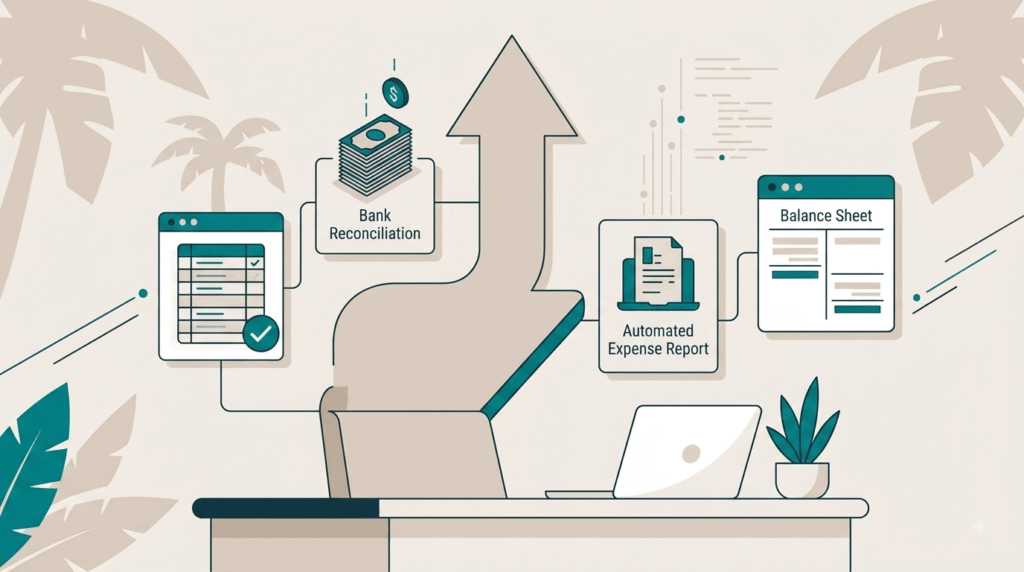
At its core, outsourced bookkeeping means someone else is recording every transaction, from client payments to software subscriptions to local expenses, on a consistent monthly schedule. This includes reconciling your bank and payment platform balances against your recorded transactions, so discrepancies get caught within weeks instead of surfacing a year later.
A good bookkeeping service also organizes your data into a clean chart of accounts that actually reflects how your business runs, rather than a generic template that doesn’t match your income streams.
For nomads dealing with multiple currencies, this process also includes proper currency conversion tracking, so your reports reflect accurate figures rather than rough estimates.
Done consistently, this monthly rhythm means you always have an up-to-date, accurate picture of your finances without lifting a finger yourself.
Tax-Ready Reports and Filing Support
Beyond basic recording, outsourced bookkeeping should produce reports that are actually ready for tax filing, whether that’s an Indonesian SPT if you’ve crossed the 183-day threshold or reports for your home country’s tax obligations.
This includes profit and loss statements, expense summaries categorized correctly for deduction purposes, and documentation organized in a way that makes filing straightforward rather than a last-minute research project.
If you do become an Indonesian tax resident, your bookkeeping service should also be able to support VAT registration if applicable, monthly PPh filings, and annual SPT preparation. Having this support in place means you’re not trying to figure out Indonesian tax forms in a language and system you’ve never dealt with before, on top of running your actual business.
It also means deadlines get tracked proactively instead of becoming a source of last-minute stress every filing period.
Payroll Support If You’re Hiring Locally
If your business grows to the point where you’re hiring Indonesian staff, whether that’s a virtual assistant, a local team member, or contractors, payroll adds another layer of compliance that outsourced bookkeeping should be able to handle.
This includes calculating and withholding the correct employee income tax, managing BPJS social security contributions if applicable, and issuing proper pay records that meet Indonesian labor requirements.
Getting payroll wrong, even unintentionally, can create liabilities for both you and your employee, so this is an area where DIY approaches tend to be riskier than they first appear. A bookkeeping partner familiar with Indonesian payroll rules can set this process up correctly from the first hire rather than requiring a correction later.
This becomes increasingly important as your team grows, since payroll errors tend to compound rather than stay isolated to a single pay period.
When It Makes Sense to Outsource Bookkeeping Instead?
Outsourcing typically makes sense once your bookkeeping starts taking up real time you’d rather spend on your actual business, or once your situation includes any Indonesian tax residency, local income, or entity registration.
It also makes sense simply as a risk-reduction move, since a professional bookkeeper is far less likely to miss a compliance requirement than someone learning Indonesian tax rules for the first time while also running a business. Cost is usually lower than people expect, especially compared to the cost of fixing a compliance mistake after the fact.
If you’ve noticed yourself avoiding your own books, or you genuinely don’t know your current profit margin without checking three different apps, that’s usually a clear sign it’s time to hand this off.
The goal is to make sure someone with the right expertise is keeping them accurate and compliant while you stay focused on growth.
How to Choose an Outsourced Bookkeeping Partner in Bali
Look for Local Tax Expertise, Not Just Software Skills
Plenty of bookkeepers are comfortable with software, but far fewer genuinely understand Indonesian tax residency rules, PT PMA compliance, or the specific reporting quirks that apply to foreign-owned businesses.
Ask any potential provider directly how they handle the 183-day residency question and what their process looks like for nomads who might cross that threshold mid-year. Their answer will tell you quickly whether they’re speaking from real experience with this exact situation or just general bookkeeping knowledge that happens to be based in Indonesia.
It’s also worth asking how frequently they’ve dealt with digital nomad clients specifically, since your situation genuinely differs from a typical local business or even a standard PT PMA.
A provider who can speak confidently and specifically about nomad tax scenarios is a much stronger sign of fit than one who simply lists Indonesian tax compliance as a general service.
Confirm They Work Remotely and Are Async-Friendly
As a nomad, you need a bookkeeping partner who works comfortably across time zones and doesn’t require you to be physically present or available during Indonesian business hours for every interaction.
Look for a provider who uses cloud-based tools, communicates clearly over WhatsApp or email, and can turn around questions without requiring a scheduled call every time something comes up.
Ask how documents get shared and how quickly you can expect responses, since slow or unclear communication defeats the purpose of outsourcing in the first place. It’s worth confirming they can support you even as your location changes, since part of the nomad lifestyle is that you might be filing documents from three different countries in a single quarter.
A partner built around remote-first, cloud-based workflows will make outsourcing feel seamless rather than like managing yet another logistical headache.
Outsourced bookkeeping is about making sure someone with the right expertise is keeping them accurate, compliant, and ready whenever you need them, whether that’s for a tax filing, a visa application, or simply your own peace of mind.
If you are running in Indonesia, the rules are different. Our guide to Bali property tax for foreign investors covers what actually applies.
For businesses operating in Indonesia, our accounting services in Bali and Jakarta cover bookkeeping, reporting and tax compliance.