
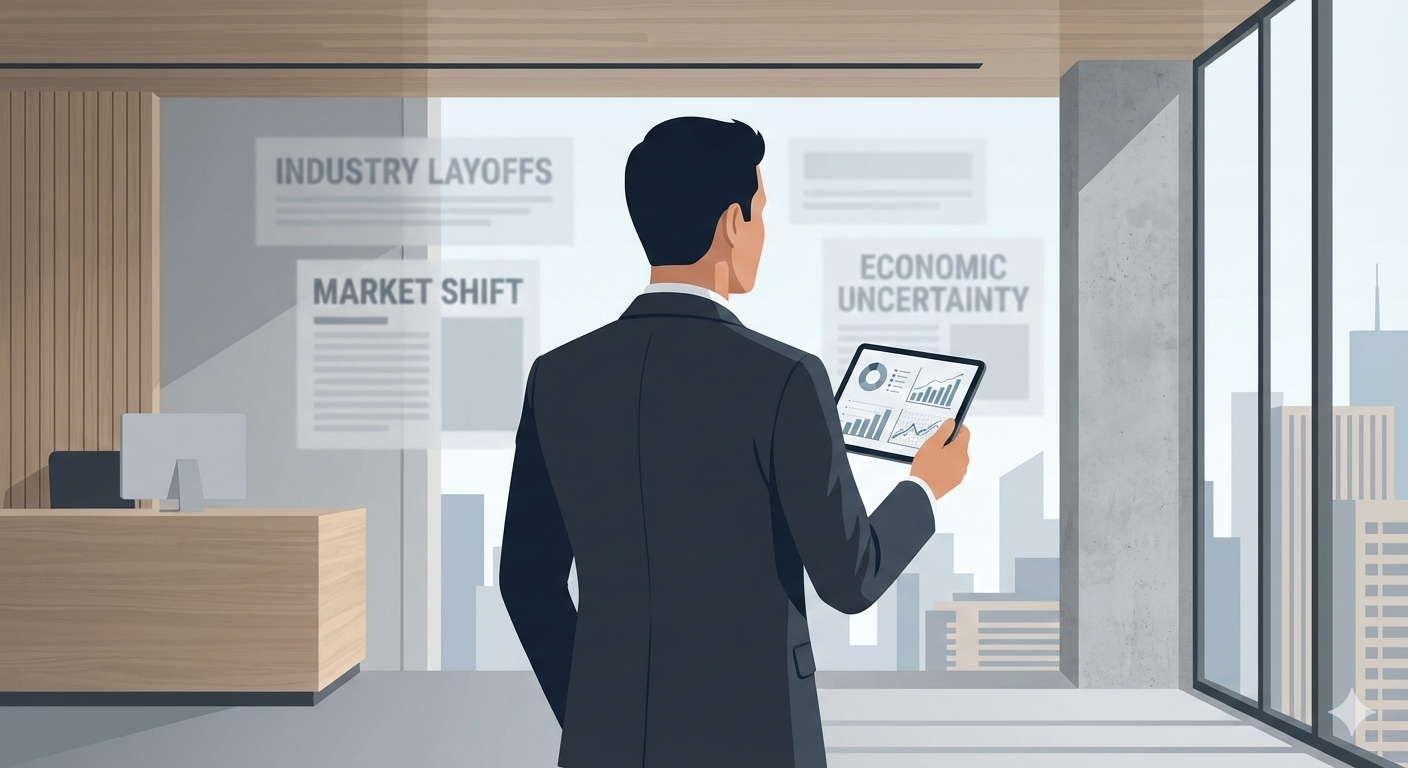
You wake up to headlines announcing another round of layoffs in your industry.
At first, it feels distant. Then a supplier delays expansion. A client postpones a contract. A competitor quietly freezes hiring. Suddenly, it no longer feels like news. It feels personal.
When layoffs hit your industry, the real risk is not panic. It is overreaction or worse, silence.
The businesses that survive turbulent cycles are rarely the ones that move fastest. They are the ones that move strategically.
The First 30 Days: Stabilize Before You React
One founder once told me, “When everyone else started cutting, I almost did too. But I realized I did not actually know my numbers well enough to justify that decision.”
That pause saved his company.
Before restructuring, reducing headcount, or freezing growth plans, leadership needs clarity on three core areas:
• Actual cash runway under conservative revenue assumptions
• Fixed commitments versus discretionary expenses
• Revenue concentration risk from key clients or markets
• Operational roles that directly protect revenue and compliance
Layoffs in your industry do not automatically mean your business is in danger. But they do mean you need visibility.
If your financial reports are unclear or delayed, this is usually the moment weaknesses surface. Many leaders only discover reporting gaps during stress, which is why clean financial systems matter long before downturns begin. This connects closely to why Why the Balance Sheet Tells the Real Story of Your Business Health is more than just an accounting concept. It becomes a strategic tool during uncertainty.
Strategic Moves That Strengthen Position Instead of Shrinking It
Layoffs create fear, but they also create repositioning opportunities.
While some competitors retreat, others quietly strengthen their fundamentals. Instead of reacting emotionally, consider responses that improve resilience:
• Reforecast your next two quarters with conservative revenue projections
• Renegotiate vendor contracts before liquidity pressure forces you to
• Identify high margin services or products that deserve more focus
• Strengthen client retention strategies rather than chasing new volume
In many cases, businesses fail during downturns not because revenue disappears, but because cash flow timing collapses. If your industry is entering a contraction phase, protecting liquidity becomes more important than chasing aggressive growth.
This is where structured cash discipline matters. As discussed in The Silent Damage Poor Cash Flow Planning Causes in Growing Businesses, weak cash planning quietly compounds risk long before layoffs appear in headlines.
The goal is not to shrink. It is to rebalance.
Some companies may need to restructure teams. Others may simply need tighter operational control. What matters is that decisions are driven by data, not fear.
A strategic response to industry layoffs requires leadership maturity. You acknowledge uncertainty without broadcasting panic. You protect your people where possible. You protect your balance sheet always.
Industries move in cycles. Strong businesses do too. The difference is that strong businesses prepare for contraction during expansion, and respond with clarity when turbulence arrives.
When layoffs hit your industry, it is not just a test of financial strength. It is a test of leadership discipline.
And disciplined leaders do not react to noise. They respond to numbers.