
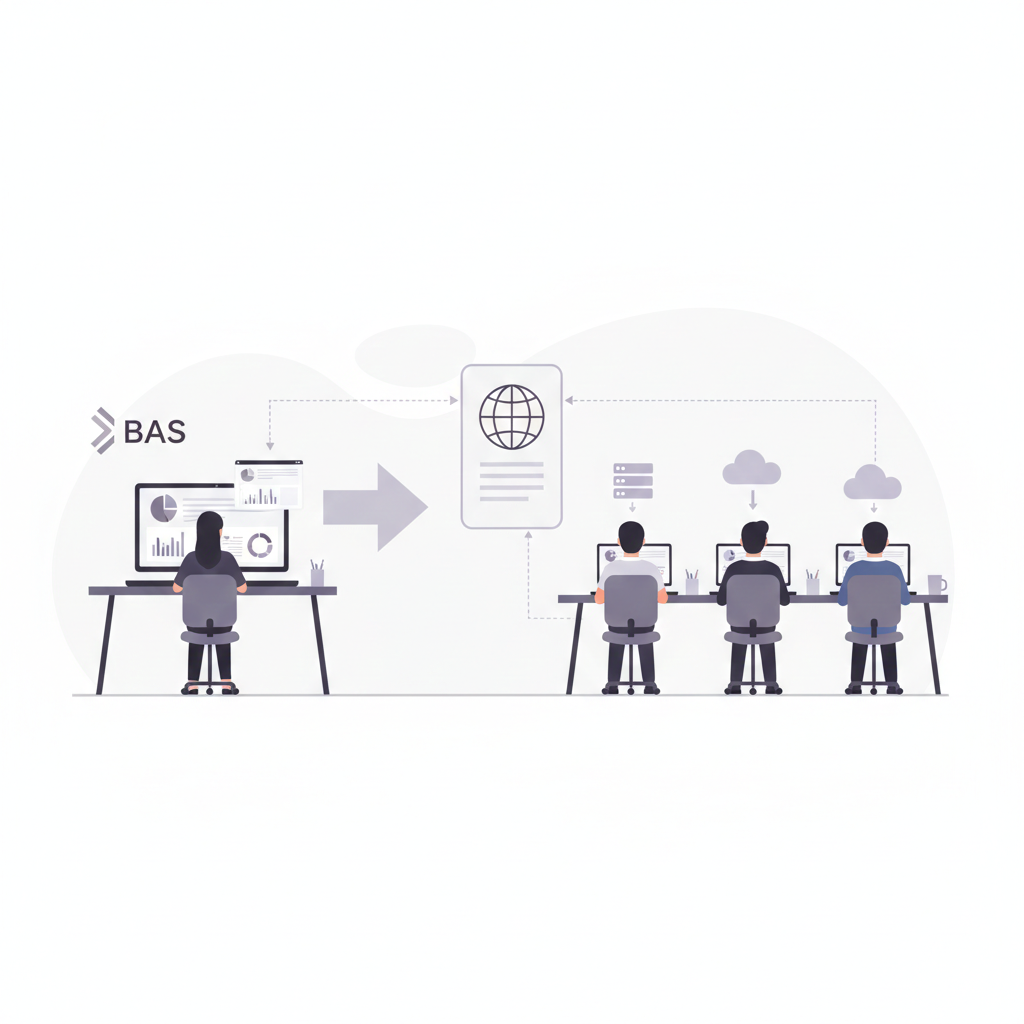
At some point, every BAS agent reaches the same crossroads. The client base grows, deadlines tighten, and the work starts piling up faster than it can be cleared. Delegation feels necessary, but one question keeps coming back. What can actually be delegated without risking compliance or losing control?
This hesitation is valid. For BAS agents, delegation is not just an operational choice. It is a compliance decision.
Why Delegation Feels Risky for BAS Agents
Unlike many business owners, BAS agents carry direct regulatory responsibility. Even when work is delegated, accountability stays with the registered agent. That reality makes blind outsourcing dangerous, but it does not mean delegation is off the table.
The real risk usually comes from delegating the wrong tasks or delegating without structure.
Problems tend to appear when:
- Decision making is delegated instead of execution
- Review processes are informal or inconsistent
- Documentation standards are unclear
- Access to client data is not properly controlled
These are process failures, not delegation failures.
This concern is closely related to what many firms face when scaling, as explained in Outsourced Accounting: The Smarter Way to Manage Your Business Finances.
Tasks BAS Agents Can Delegate With Confidence
Delegation works best when it supports accuracy and consistency rather than replacing professional judgment. Many tasks are well suited for delegation because they are structured, repeatable, and reviewable.
Common examples include:
- Bank and credit card reconciliations
- Data entry and transaction categorization
- Payroll preparation support, excluding final approval
- Report preparation and draft BAS working papers
When these tasks are delegated properly, BAS agents free up time for review, advisory work, and client communication without compromising compliance.
This approach mirrors best practices discussed in How U.S. Accountants Can Safely Outsource Bookkeeping, where control frameworks matter more than location.
How to Delegate Without Losing Control
Safe delegation is not about trust alone. It is about design.
Successful BAS agents build delegation around clear boundaries. Offshore or junior support teams handle preparation and processing, while registered agents retain review authority and submission responsibility.
Clear workflows, documented procedures, and consistent review checkpoints turn delegation into a risk reduction strategy rather than a liability. Instead of increasing exposure, structured delegation often reduces errors caused by overload and fatigue.
Delegation does not weaken compliance when done correctly. It strengthens it.
For BAS agents, the safest approach is not doing everything personally, but designing a system where the right tasks are delegated and the right decisions stay in house. When control and clarity come first, delegation becomes a growth tool rather than a compliance risk.