

Running a business today demands speed, clarity, and financial discipline. Yet many founders, freelancers, and digital nomads struggle to maintain accurate books while juggling operations, clients, and growth. Remote bookkeeping has emerged as a practical, reliable answer a way to access professional accounting support without the cost of hiring in-house staff.
This guide brings together everything you need to know about remote bookkeeping in 2025: how it works, what it costs, which tools you’ll need, and why more companies from early-stage startups to global entrepreneurs rely on it.
What Exactly Is Remote Bookkeeping?
Remote bookkeeping is the practice of managing your financial records from anywhere using cloud accounting tools. Instead of coming into your office, your bookkeeper works online, categorizing transactions, reconciling bank accounts, preparing financial statements, and ensuring your business always has accurate, up-to-date numbers.
It’s incredibly efficient, particularly if your business already uses digital payments, cloud banking, or online invoicing. In 2025, remote bookkeeping has become the default choice for many lean, modern businesses that want accuracy without overhead.
How Remote Bookkeeping Works (Step-by-Step)
Although the idea sounds complex, the process is simple and highly structured:
1. Secure Access Setup
You grant your bookkeeper view-only access to your accounting tools or bank feeds. No permissions to move money only to read and classify.
2. Transaction Categorization
Daily or weekly, your bookkeeper classifies expenses and income into the correct categories. This is the foundation of accurate financial reporting.
3. Bank Reconciliation
Every transaction is matched with a bank record to ensure nothing is missing or duplicated.
4. Monthly Closing & Review
Your bookkeeper prepares monthly reports such as:
- Profit & Loss
- Balance Sheet
- Cash Flow Summary
5. Advisory & Insights
A good remote bookkeeper doesn’t just input data — they help you understand it. You should walk away each month with clarity, not confusion.
For additional reading, your existing article on outsourced accounting strategies provides a deeper look at how remote finance teams support founders.
Why Businesses Choose Remote Bookkeeping
1. Lower Cost, Higher Expertise
Hiring in-house can be expensive. Remote bookkeepers offer professional service at a fraction of the cost — without training, benefits, or office expenses.
2. Better Compliance & Fewer Errors
From common accounting mistakes to payroll compliance mistakes, founders often underestimate how easy it is to make costly errors. A trained bookkeeper prevents them.
3. Global Talent, Not Just Local
You aren’t limited by geography. You can work with a specialist who understands U.S. GAAP, Singapore tax, Australian GST, or Indonesian UMKM requirements.
4. Perfect for Digital Nomads & Remote Teams
If you operate from Bali, Lisbon, Kuala Lumpur, or anywhere in between, remote bookkeeping keeps your financial operations consistent. See your article on bookkeeping for digital nomads to explore this further.
5. Built for Scaling
Whether you run a solo consulting business or a growing startup, remote bookkeeping adapts to your volume and complexity.
How Much Does Remote Bookkeeping Cost in 2025?
Pricing varies by country and complexity, but these ranges are common:
| Region | Typical Monthly Cost |
|---|---|
| United States | $350 – $1,200+ |
| Singapore | $250 – $800 |
| Australia | $300 – $900 |
| Indonesia | $80 – $300 |
High-complexity businesses (multiple revenue streams, payroll, inventory) may require custom pricing.
For businesses in the U.S., your IRS-compliant outsourcing guide explains how remote bookkeeping can remain fully compliant even when handled internationally.
Essential Tools for Remote Bookkeeping in 2025
You only need a small set of tools to run a clean, modern finance system:
- QuickBooks Online — the most widely used global platform
- Xero — intuitive, clean, and perfect for remote teams
- Wave — great for freelancers and small independent operators
- Google Workspace — for file sharing and financial documents
These tools allow both you and your bookkeeper to collaborate seamlessly, regardless of timezone.
Signs You’re Ready to Hire a Remote Bookkeeper
Consider getting help if:
- You spend more than 3 hours a week dealing with receipts or categorizing expenses
- You’re unsure if your business is actually profitable
- Your tax deadlines catch you off guard
- Your cash flow feels unpredictable
- You want to focus on operations instead of spreadsheets
If any of these feel familiar, you’re not alone
The majority of small businesses struggle in exactly the same way.
What a Remote Bookkeeper Actually Does (Daily, Weekly, Monthly)
Daily
- Categorize expenses
- Match transactions
- Review bank feeds
Weekly
- Update revenue tracking
- Prepare invoice lists
- Reconcile quick-pay receipts
Monthly
- Prepare financial statements
- Review cash flow
- Flag unusual spending
- Provide insights & recommendations
This structure ensures nothing is missed and every number stays accurate.
Who Benefits Most From Remote Bookkeeping?
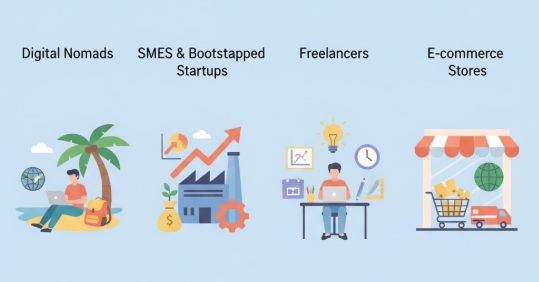
Digital Nomads
People running businesses from Bali, Thailand, Portugal, or Mexico need consistent support even when their environment changes.
SMEs & Bootstrapped Startups
Modern founders want lean operations without sacrificing compliance.
Agencies & Freelancers
Remote bookkeepers help keep retained clients, projects, and invoices organized.
E-commerce Stores
You get real-time visibility into inventory costs, ad spend, and margins.
Is Remote Bookkeeping Secure?
Yes.
Using read-only access, banking-grade encryption, and controlled permissions makes remote bookkeeping extremely safe. In fact, for many small businesses, digital records are safer than paper-based bookkeeping.
High-trust practices are further outlined in your IRS-compliant outsourcing guide.
Why IndoLedger Is Built for Remote Clients
IndoLedger is designed around clarity, speed, and global standards. We work with clients across the U.S., Bali, Singapore, and Australia. Offering bookkeeping that is accurate, transparent, and tailored to the realities of modern entrepreneurs.
If you’re new to IndoLedger, IndoLedger services gives a clear overview of what we offer.
In 2025, remote bookkeeping is no longer a niche solution. It has become the backbone of financial operations for modern businesses. Whether you are a founder scaling a startup, a digital nomad managing multiple income streams, or an SME owner trying to make sense of cash flow, remote bookkeeping provides the accuracy and reassurance you need to make confident decisions.
If you want better numbers, fewer headaches, and more time for the work that truly matters, remote bookkeeping might be the smartest move you make this year.