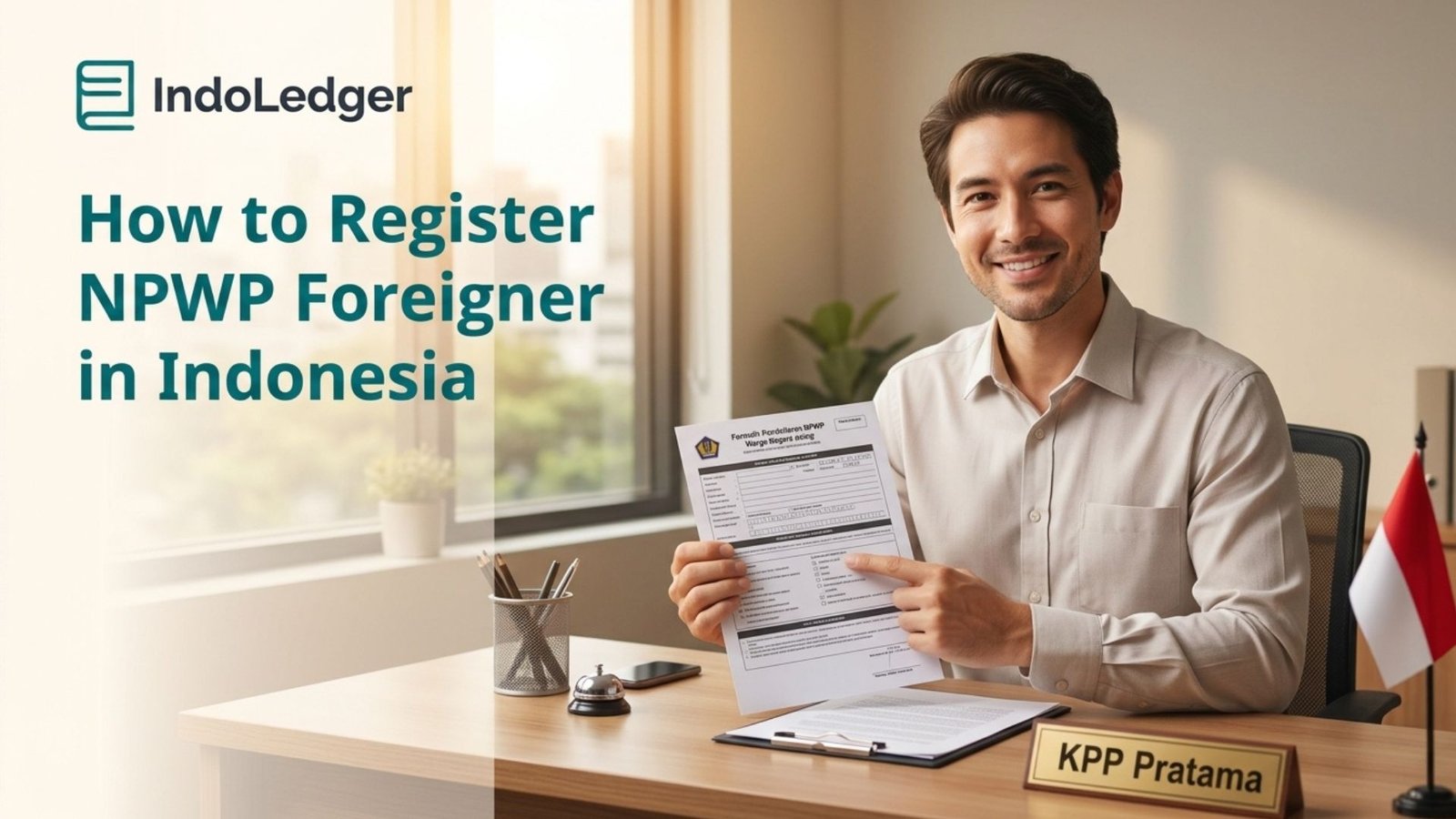
If you’ve been told you need an NPWP but the process feels like a maze of unfamiliar acronyms and government portals, you’re definitely not alone. Between KITAS, KPP, e-Registration, and Coretax, it’s easy to feel like you need a translator just to figure out where to start, let alone what documents to actually prepare. The good news is that once you break it down step by step, register NPWP foreigner is genuinely more manageable than it first appears.
In this guide, we’ll walk you through exactly what an NPWP is, whether you actually need one, what documents to gather beforehand, and the specific steps to register, whether you go online or in person.
By the end, you should have a clear enough picture to either handle this yourself or know exactly what to ask for if you bring in local help.
What Is an NPWP and Who Needs One?
NPWP (Nomor Pokok Wajib Pajak) essentially Indonesia’s version of a taxpayer identification number, functioning as your unique ID for anything tax-related in the country. Think of it as similar in purpose to a Social Security Number in the US or a Tax File Number in Australia, a single reference number the tax office uses to track your filings, payments, and obligations.
Both individuals and companies can hold an NPWP, with a personal NPWP covering individual income tax obligations and a corporate NPWP covering a registered business entity like a PT PMA. Beyond pure tax filing, an NPWP has become something of a practical necessity in Indonesia, often required for opening certain bank accounts, purchasing property or vehicles, or even applying for some types of loans.
This number actually makes the registration process feel a lot less like arbitrary bureaucracy and more like a straightforward administrative step.
Also Read: Can Digital Nomads in Bali Open a PT or CV?
Do You Actually Need to Register NPWP?
Legally, foreigners are required to register for an NPWP once they meet Indonesia’s tax residency criteria, most commonly by staying in the country for more than 183 days within a rolling 12-month period. Holding certain long-term visas, like a work-related KITAS or a remote worker visa, can also imply an intent to reside that may trigger the registration requirement even before you’ve hit the full 183 days.
If you’re employed by an Indonesian company, your employer will often need your NPWP to process payroll correctly, which makes registration a practical necessity even beyond the strict residency threshold. Business owners, freelancers, and self-employed foreigners generating income connected to Indonesia generally need to register regardless of their exact day count, since business activity itself can trigger tax obligations.
If you’re unsure whether your specific situation crosses the threshold, it’s worth checking with a local tax professional rather than guessing, since getting this wrong in either direction, registering unnecessarily or failing to register when required, both create avoidable complications.
Documents You Need Before You Start Registration NPWP
Required Documents for Employed Foreigners
If you’re working for an Indonesian company as an employee, the core documents you’ll typically need include a copy of your valid passport, your KITAS or KITAP residence permit, and a letter of employment or job contract from your employer confirming your role.
Some tax offices also request a domicile certificate confirming your current address in Indonesia, which your employer or landlord can usually help provide. You’ll want to make sure these documents are current and that any required translations into Bahasa Indonesia are completed, since outdated or improperly translated documents are a common cause of processing delays.
Having a valid, active email address and Indonesian phone number ready also matters, since these are typically required fields during the registration process itself. Gathering all of this before you start the actual application saves you from the frustration of a partially completed registration that stalls out waiting for one missing document.
Required Documents for Business Owners and Freelancers
If you’re self-employed, running a freelance practice, or operating as a business owner rather than a traditional employee, your document list looks slightly different. You’ll still need your passport and KITAS or KITAP, but instead of an employment letter, you’ll typically need to provide your business license or company deed if you’re operating through a registered entity, or a certificate confirming your business activity from your local village or district office if you’re operating more informally.
Freelancers without a formal business registration sometimes find this step slightly more involved, since the tax office wants some form of documented evidence of your business or independent work activity in Indonesia. If your income comes primarily from overseas clients with no formal Indonesian business registration, it’s worth having a clear, honest description of your work activity ready to explain during the application process.
Being upfront and organized about your specific situation, rather than trying to fit into a template that doesn’t quite match your circumstances, tends to make the registration process go more smoothly.
Also Read: PT PMA Tax Obligations in Indonesia: Guide to Income Tax, VAT, and Withholding
How to Register NPWP Foreigner Online
Registering Through the e-Registration Portal
The Directorate General of Taxes operates an online e-registration portal at ereg.pajak.go.id, which is generally the most convenient way for foreigners to start their NPWP application without needing to physically visit a tax office first. Begin by creating an account using a valid email address, which you’ll need to verify before proceeding to the actual application form.
From there, you’ll fill in your personal details, including your passport number, KITAS or KITAP information, and residential address in Indonesia, along with details about your employment or business activity.
You’ll then upload scanned copies of your required documents, passport, residence permit, and either your employment letter or business registration documents, depending on your situation.
Take your time reviewing each field before submitting, since errors or mismatched information between your uploaded documents and your entered details are a common reason applications get sent back for correction.
What Happens After You Submit
Once you’ve submitted your online application, a tax officer will review your documents and verify your legal stay status, which can take anywhere from a few days to a couple of weeks depending on the tax office’s current workload and whether any additional clarification is needed.
In some cases, you may be contacted for additional documentation or asked to attend a brief interview or verification appointment, particularly if your situation involves a less common employment or business structure.
If everything is in order, your NPWP will be issued, typically available in both digital form accessible through the DGT’s online system and as a physical card mailed to your registered address. It’s worth checking your registered email and phone regularly during this waiting period, since that’s usually how the tax office will reach out if anything needs clarification.
Once issued, your NPWP number becomes your permanent tax identifier, and you’ll want to keep both the digital and physical versions accessible for future reference.

Registering NPWP In Person or Online?
When Online Registration Works Best
For most foreigners with a relatively straightforward situation, employed by a single Indonesian company or running a clearly documented business, online registration through the e-registration portal is generally the faster and more convenient option. It saves you the time of physically traveling to a tax office, and you can complete much of the process at your own pace, gathering and uploading documents as you have them ready.
This route tends to work particularly well if you’re comfortable navigating government websites and have all your documentation already digitized and ready to upload. If your employer or accounting provider is helping guide you through the process remotely, online registration also makes it easier for them to review your application details before submission.
For anyone whose schedule makes visiting a physical tax office during business hours genuinely difficult, the online route removes that logistical barrier entirely.
When You Might Need to Visit the Tax Office
Some situations still benefit from, or require, an in-person visit to your local Kantor Pelayanan Pajak, particularly if your online application gets flagged for additional verification or if your employment or business situation is more complex than the standard template accounts for.
If you’re not confident navigating Bahasa Indonesia-language government portals, an in-person visit lets you get direct guidance from tax office staff, which can be genuinely helpful for a first-time registration. Business owners with less conventional structures, like informal freelance work without a registered entity, sometimes find that an in-person conversation resolves questions more efficiently than an online form that doesn’t quite capture their situation.
If you’ve submitted online and haven’t heard back within a reasonable timeframe, following up in person at your local tax office can also help move a stalled application forward. Whichever route you start with, knowing that both options exist means you’re not stuck if one approach doesn’t work smoothly for your particular case.
After You Get Your NPWP: What Comes Next?
Activating E-Filing and Coretax Access
Once your NPWP is issued, the next practical step is activating your access to Indonesia’s e-filing system through the Coretax platform, which is what you’ll use for submitting your annual tax return and managing your ongoing tax obligations digitally.
This typically involves creating login credentials linked to your NPWP and verifying your account through email or phone confirmation, similar to setting up any other secure online government service. Taking the time to properly set this up right after receiving your NPWP, rather than waiting until your first filing deadline approaches, saves you from troubleshooting technical access issues under time pressure.
It’s also worth familiarizing yourself with the basic layout of the Coretax system early on, since Indonesia’s tax administration has been consolidating more functions into this single integrated platform.
Staying Compliant Going Forward
Getting your NPWP issued is really just the starting point, not the finish line, since holding a valid NPWP comes with an ongoing obligation to file your annual personal income tax return, typically due by the end of March each year.
If your income or employment situation changes, a new job, starting a business, or a change in visa status, you’ll want to make sure your registered information stays current and accurately reflects your actual circumstances. Keeping basic records of your income and any relevant expenses throughout the year makes your annual filing significantly easier than trying to reconstruct everything from scratch each March.
If you’re at all unsure about what needs to be reported or how to correctly complete your annual filing, especially in your first year as a registered taxpayer, getting guidance from a local tax professional is generally a worthwhile investment. Treating your NPWP as the beginning of an ongoing compliance relationship with the Indonesian tax system, rather than a one-time administrative task, sets you up to stay comfortably compliant for as long as you remain in the country.
Conclusion
Registering for an NPWP as a foreigner in Indonesia is a lot less intimidating once you know exactly what documents to prepare and which steps to follow, whether you choose the online portal or an in-person visit to your local tax office. Getting this done properly, and early, protects you from the much bigger headache of dealing with back taxes or unclear residency status further down the line.
If you’d rather have someone experienced handle this registration on your behalf, or you want to make sure your specific employment or business situation is documented correctly from the start, our team at IndoLedger regularly helps foreign individuals and business owners get properly registered and compliant with Indonesia’s tax system.