
Many business owners believe accounting is only about recording numbers. In reality, the accounting method you choose quietly shapes how you see your business, make decisions, and plan for growth.
One of the most common questions founders ask is whether they should use cash accounting or accrual accounting. The answer depends less on preference and more on where your business is today and where it is heading.
Understanding the difference early can save you from cash surprises, reporting confusion, and painful adjustments later.
Understanding Cash Accounting in Simple Terms
Cash accounting records income when money is received and expenses when money is paid. It mirrors your bank balance closely, which is why many early stage businesses feel comfortable using it.
This method works well when operations are simple and transactions are limited. It gives a clear picture of short term liquidity and helps founders track daily cash movements easily.
However, as sales grow and payment terms become more complex, cash accounting starts hiding important information.
Common situations where cash accounting becomes misleading include:
• Invoices issued but not yet paid
• Expenses incurred but paid later
• Subscription or project based revenue
Your business may look profitable one month and weak the next, even when operations are stable.
How Accrual Accounting Changes the Picture
Accrual accounting records income when it is earned and expenses when they are incurred, regardless of cash movement. This method reflects business activity more accurately.
For growing businesses, accrual accounting creates clarity. It shows whether your operations are truly profitable, not just whether cash came in.
Accrual accounting becomes essential when:
• You issue invoices with payment terms
• You manage inventory
• You work with long term projects or retainers
• You plan to raise funding or work with investors
Investors and lenders rely on accrual based reports because they reveal performance trends, not just cash timing.
You can explore how clean financial structure supports better decisions in this article:
How Clean Bookkeeping Helps Small Businesses Save Thousands Every Year
Which Method Fits Each Business Stage?
There is no universal answer, but there is a clear pattern.
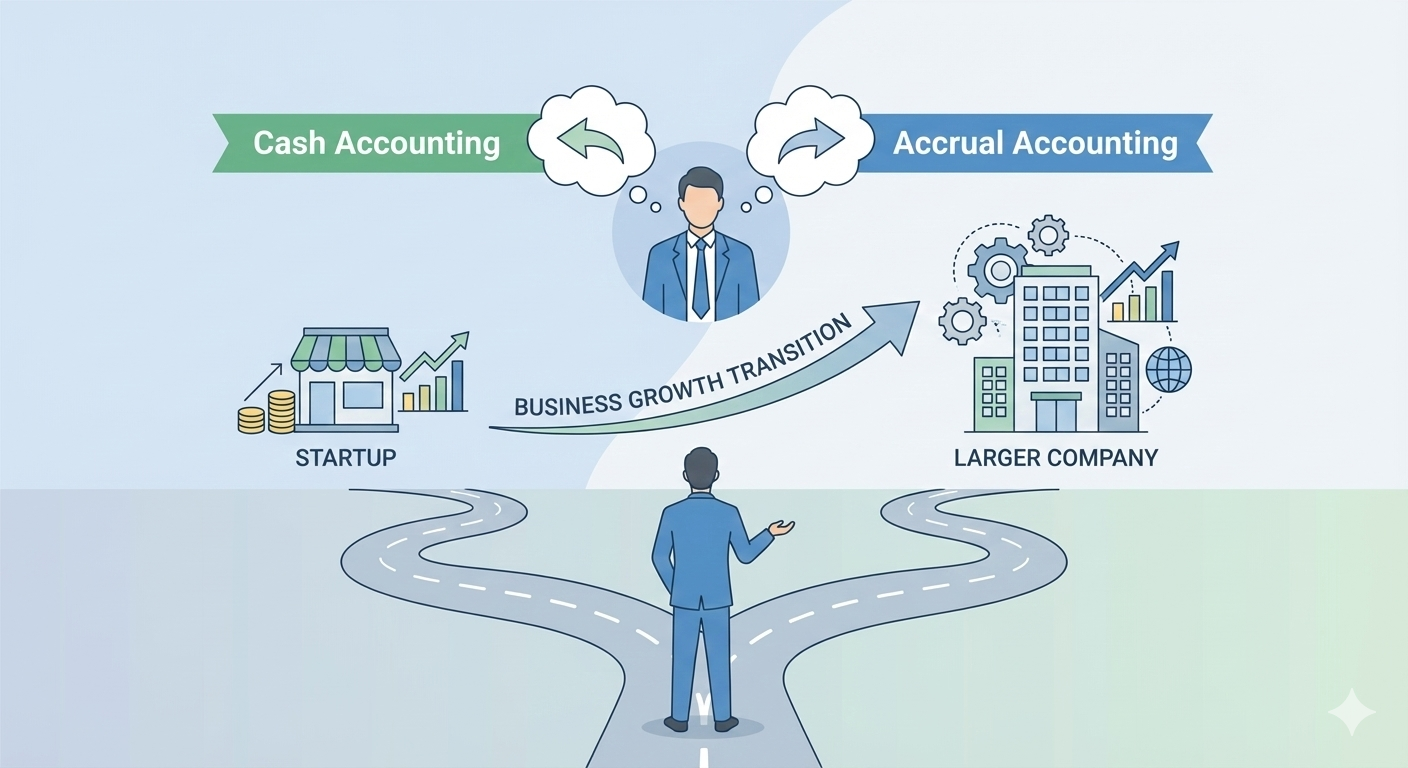
Early stage businesses with simple transactions often start with cash accounting because it is easy to maintain and understand. Once revenue grows, teams expand, or financial reporting becomes more strategic, accrual accounting provides better control.
Many founders wait too long to switch, then struggle to interpret their numbers during growth.
If your sales are increasing but cash flow feels unpredictable, you may already be feeling the limits of cash accounting. This issue is explained further here:
High Sales but Bad Cash Flow?
The Risk of Choosing the Wrong Method
Using the wrong accounting method at the wrong stage creates blind spots.
Cash accounting may hide future liabilities and overstate short term performance. Accrual accounting without proper bookkeeping discipline may feel complex and confusing.
The real risk is not the method itself, but using it without structure, consistency, and professional oversight.
This is where many growing businesses benefit from external support.
How Indoledger Helps Businesses Transition Smoothly
At Indoledger, we help founders choose and implement the accounting method that fits their current stage and growth goals. Whether you are transitioning from cash to accrual or cleaning up existing records, our team ensures your financial reports remain accurate, compliant, and decision ready.
Learn more about our accounting and bookkeeping services here:
https://indoledger.com/services/
If you are scaling with a remote team, this article may also be helpful:
Outsourced Accounting: The Smarter Way
Final Thoughts
Cash accounting helps you survive early stages. Accrual accounting helps you grow with confidence.
The right method gives you visibility, not complexity. When aligned with your business stage, accounting becomes a tool for clarity rather than a source of stress.
If you are unsure which method fits your business today, it may be time to review your financial foundation before growth makes it harder to change.